
Drum Replacement and Amp Simulation
Drum Replacement and Amp Simulation: How Modern Studios Shape Your Sound
When most people think about what happens in a recording studio, they picture microphones, live rooms, and a band playing together. What they don’t always see is what happens after tracking — and how today’s production tools can transform a good recording into exactly the sound the music demands.
At Allusion Studios, we’ve been using drum replacement and amp simulation on recent projects across two very different genres. The results speak for themselves, but the real story is about knowing when to use these tools and which ones to reach for.
What Is Drum Replacement?
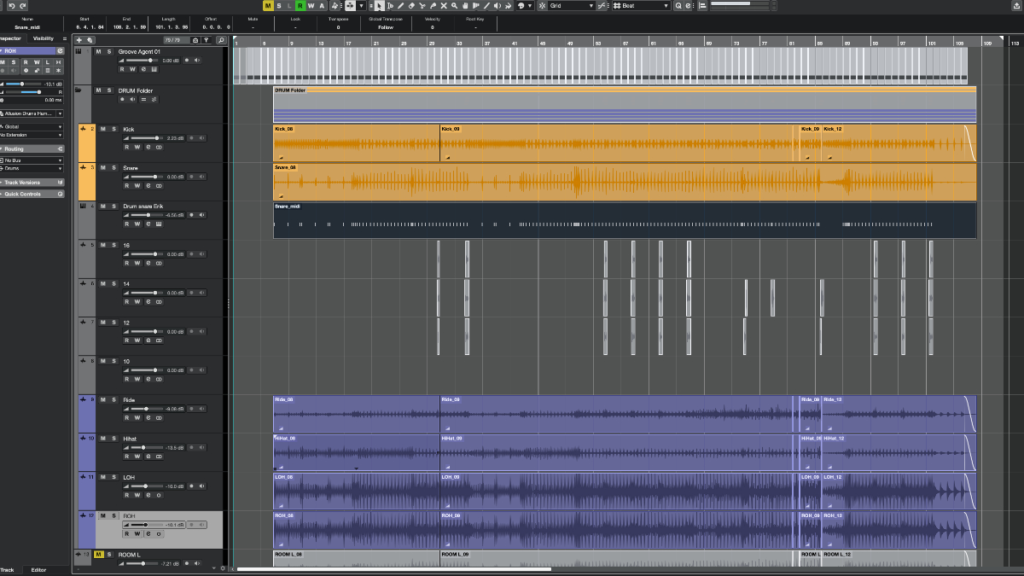
Drum replacement is the process of substituting a recorded drum hit — kick, snare, or tom — with a sample that better serves the mix. It isn’t about covering up bad playing. It’s about getting the sonic character the music requires, regardless of what was available on tracking day.
Modern replacement tools can match the timing and dynamics of the original performance precisely. Done right, the listener never knows it happened. They just hear a drum sound that sits perfectly in the mix.
What Is Amp Simulation?
Amp simulation allows an engineer to run a recorded guitar signal — or a direct input — through a software or hardware model of a real amplifier. The best modern amp sims are modeled directly from the actual hardware, capturing the harmonic character, compression, and breakup of the original amp with remarkable accuracy.
This means the guitar amp in the room on tracking day doesn’t have to be the amp on the record.
Two Projects, Two Completely Different Applications
SOL-OF-X — Metal That Hits Like It Should
Working with SOL-OF-X, the goal was clear from the start: kick and snare sounds with the kind of cutting-edge beef that metal demands. We used drum replacement on both to get the punch, weight, and low-end presence the music was built around.
The guitar situation presented its own creative opportunity. The guitarist had a practice amp — not unusual, and not a problem. Instead of working around it, we reached for two of the best metal and rock amplifiers in the world: the Diezel VH4 and a Friedman. We ran both and double-tracked them, building a wall of sound that sits exactly where it needs to in a dense metal mix.
Blues Project — Solving a Tracking Problem, Finding a Better Sound
On the opposite end of the spectrum, we were brought in to mix a blues album that was tracked elsewhere. The performances were strong, but two issues needed solving.
First, the guitar tones needed to breathe differently — more authentic, more alive. We chose Enigmatic and Showtime amp models to bring the guitars to life with the warmth and character the blues requires.
Second, there was a technical problem from the original tracking session: cymbal bleed had gotten into the tom mics throughout the recording. Enough to cause separation issues and introduce harshness that didn’t belong in the mix. The solution was full tom replacement across the entire album — cleaner separation, no bleed, and toms that finally sit where they should.
The Part No Plugin Can Replace
Today’s tools are genuinely remarkable. What’s available now would have seemed impossible twenty years ago. But the technology is only as good as the decisions behind it.
Knowing when drum replacement serves the music — and when it doesn’t. Knowing which amp model captures the right harmonic character for the genre. Knowing how to blend a replaced tom so it feels like it was always there. These are still creative decisions. They always will be.
If you’re working on a project and wondering whether the sounds you tracked are the sounds you’re stuck with — they probably aren’t.
Call 520-622-3895 or visit allusionstudios.com to talk about your project.